Showing posts with label types. Show all posts

Wednesday, April 29, 2009

For Beginners

Digital photography is a fun task for virtually everyone. You no longer have to be a professional photographer to get the best images available. Getting instant access to your photos is a whole lot better than waiting for them to be printed from film. Since there are so many digital cameras on the consumer market, choosing the best one for you may be confusing. With a little help, you'll learn how to choose the best camera for a beginner.

Some basic instructions you need to follow first :-

Step1
Decide your spending budget for a brand-new digital camera. This will help to guide you towards the perfect digital camera for your needs. Spending a large amount of money is not a necessity when purchasing a digital camera. There are plenty of budget cameras that are more than capable of taking care of your necessities. If you are not going to use your digital camera on a regular basis, then don't buy one that has an overwhelming amount of features. Sticking to the basics will keep the price lower.

Step2
Consider the size and weight of your digital camera. If you decide to snap images everywhere you travel, then choose a digital camera that is portable enough. You don't want to carry something that is oversized and bulky when traveling to multiple destinations. Having a digital camera with a longer battery life and high megapixels will also help you choose the best digital camera for your beginning stages. Despite these important features, look at the overall rating of the digital camera you are thinking of purchasing.

Step3
Calculate the camera accessories. Some digital cameras have a very low initial pricing, but it soon increases when it comes to upgrading the camera lens and other components. Before purchasing the first digital camera you come across, investigate everything. Compare pricing for the memory, batteries, charger, and the lens. This will help you to figure out if this is the best digital camera for you. Without doing your research first, you will be very disappointed with your new purchase.

Step4
Ask about the return policy. This should be the first question asked when thinking about buying a digital camera. No one wants to get stuck with a device you cannot use. If you purchase your digital camera at a discounted price, it can sometimes mean that this is a final priced item with no returns. Check all paperwork and store signs before making a final decision. Take a few test shots while you are at the store locations to find out about some of the digital camera's features.

Think Its Enough, Ummmmmm............ Not Yet, The Deal Is Not Over,
Check This Out

How to Choose the Best Camera?

With so many camera models to choose from, at a bewildering range of prices, where do you start? Well, the way I choose any new toy these days is to start at the end. What do you want it to do? Err . . . take pictures. Yes but what kind of pictures and what are you going to do with them? The other burning question is how much are you prepared to learn? And, of course, how much are you prepared to pay?

As you are reading this and have actually made it to paragraph two, I think we can assume that you are prepared to learn at least a little. So what do you want to do? Do you want something that you can keep in your pocket at all times so you can snap the kids? Do you want a camera that will allow you to take pictures in any lighting conditions from any distance (with the right gadget screwed on the front of course)? Is this going to be a hobby or just some quick snaps?

So to avoid ur best choice turning worst later, click on the following :-

The Learning Curve

SLR or Compact?

Which brand?

How Many Pixels?

SLR or Compact?

All the cameras on the market can be categorised into a few simple groups. The most important two groups are fixed lens and interchangeable lens. The fixed lens cameras, so called Compact Cameras, tend, with a few exceptions, to be smaller, lighter and more pocketable, therefore you are more likely to have it with you when you need it. Well that's the theory anyway but I think we can say that you are more likely to be bothered to take it with you on that outing to the beach or the zoo.
However even with today's zoom lenses, which are pretty wonderful, you will often find that you are too far away or too close to get the picture you want so you need to be able to change the lens for a longer telephoto or a wider angle. The other major advantage of these single lens reflex (SLR) cameras is that you are actually looking through the lens instead of a separate viewfinder so what you see is what you get, although this is less of an issue now that we can review our photos on the screen of the digital camera. The down side of these SLR cameras is that you very soon end up with quite a heavy bag of gadgets and are less likely to carry it everywhere with you. However much I yearn for a compact camera for it's handyness I know I would be frustrated by it's shortcomings so for me the choice is SLR every time.


Digital or Film?

Do they still make film cameras? Oh yes they do and I wouldn't mind betting that they continue to do so for many years and I wouldn't mind betting that at some time in the future there will be a retro backlash and a large number of 'serious' photographers will return to the darkroom. Some will probably claim that they have never used digital at all, ever.
You might think from the remarks above that I am a diehard supporter of film. Nothing could be further from the truth actually, I am now fully converted to digital and loving it. I am going to make the pros and cons a separate discussion that will be posted soon but, for now, I'll just say that I am completely sold on digital and do not feel that I have lost anything significant by changing.

Which brand?

This, of course, is the big question that you really want an answer to and you know that nobody is going to give you one. If you ask anyone who already has a camera most will support the brand of the camera they have unless they have had some trouble with it, even then people are very forgiving. I think the reason for this is that people think that, if they have made the wrong choice it is because they have somehow failed, and they are not going to admit their failure.

Back in the 1980s I had a camera shop in England and at the time a lot of people, who already owned an SLR, were buying compact cameras 'for the wife'. They would ask me which brand was the best and, if I didn't already know, I would discreetly try to find out which brand of SLR they owned, then I would recommend the same brand of compact camera.

Trying to sell them another brand was like telling them they had made a wrong choice when buying their old camera and was likely to lose me a sale. So I'd better have a really good reason for not recommending the Canon, Olympus, Nikon, Pentax or whatever and I didn't have one. All of the well known brands produce similar cameras at similar prices and, by and large, you get what you pay for.

I will stick my neck out a little bit here and say that in my humble opinion the manufacturers who make the best film cameras the Japanese Nikon, Canon, Olympus, Pentax, Minolta and the German Contax and Leica seem to make the best digital cameras.

I would not be too happy to put my trust in brands whose traditional expertise is in other fields when there are such good cameras available from the traditional sources. I will probably get a lot of hate mail from people who have bought Sony cameras or Hewlett Packard and are perfectly happy with them.

If I wanted a printer Hewlett Packard would be top of my list and I am a huge fan of Sony video and TV equipment but my first choice for a digital SLR would be one of the names mentioned above.

Saturday, March 8, 2008

Photography Types:-


There's a wide world of different kinds of photography to be found on the Web. Photographic work can be divided into dozens of categories, many with lots of sub-categories. The following list describes some common types of photography.


Aerial

From a plane, helicopter, balloon or other airborne device.
Adventure, Action
Adventure sports, daring feats, etc.
Amateur
Any type of photography practiced by non-professionals.
Animal, Pet
Pets and their relationships with humans. Note that the human content is often as important as the animal.
Architecture, Real Estate
The art of making property appear attractive. Often involves panoramic photography.
Artistic
Photography in which creative composition is the goal.
Astrophotography
Space photography, through a telescope.
Aura
A controversial type of photography which some claim can photograph a person's aura.
Black & White
Not simply photography without colour, black and white photography explores shapes, tones and textures. Shadows and highlights become much more important.
Camera Phone
"Convenience" photography using a mobile phone's built-in camera. While not the best quality, camera phones have opened a new world of spontaneous, on-the-spot photo opportunities.
Commercial
Product shots, advertising, etc.
Digiscoping
Photography through a telescope or binoculars.
Documentary
Journalism, Events, Historical, Political, etc.
Event
Concerts, Parties, Festivals, etc.
Forensic
Police and legal photography.
Infrared
Photography in which the recording medium is sensitive to infrared light rather than the normal visible light spectrum.
Large Format
For use on posters, billboards, etc.
Kirlian
A type of contact print photography in which an object touching a photographic plate is connected to a high voltage source, creating an aura-like image. Often confused with aura photography.
Macro
The art of photographing very small and/or close-up objects.
Medical
Specialized photography for clinical purposes, i.e. to help reveal and diagnose illness.
Microscopic
Any technique for photographing objects too small to be visible to humans.
Modeling
Photographing objects to be converted into 3D models.
Nature
Landscapes, animals, plants, sea, etc.
Night
Any technique used to capture images at night. Often includes infrared photography.
Panoramic
Views of wide areas, up to complete 360° panoramas.
Paranormal
Ghosts, unexplained phenomena, etc.
People
Candid, Family, Fashion, Glamour, Passports & Visas, Portrait, Pregnancy, School, Sports, Wedding
Pinhole
Uses the most basic type of camera possible — a box with a tiny hole to let light in.
Scenic
Landscape, Cityscape
Satellite
Views of Earth from orbit.
Scientific
Any specialized photography used for scientific endeavour, e.g. electron microscopy photographs, medical photography, astrophotography, etc.
Sports
The specialized art of shooting people engaged in sports, games and adventure activities.
Stereoscopic (3-D)
Involves taking two photos simultaneously to simulate 3-D vision.
Stock
Photographs taken for distribution to other people, for use in their projects. These photos tend to be quite generic, e.g. people working, landscapes, places, etc.
Travel
Photography to showcase locations, illustrate travel literature, etc.
Ultraviolet
Photography in which the recording medium is sensitive to ultraviolet light rather than the normal visible light spectrum.
Underwater
Any type of photography taken under water with a water-tight camera housing.
Urban, Industrial
Emphasizing urban environments.
Time-lapse
Photographs with a very long exposure, used to illustrate something happening over time. A popular example is a street at night with car lights blurred into long lines.

Fine art photography

Fine art photography refers to photographs that are created to fulfill the creative vision of the artist. Fine art photography stands in contrast to photojournalism and commercial photography. Photojournalism is to promote an editorial point of view. Commecial photography's main focus being to sell a product or service.

'The final creative reason for a fine art photograph is the photograph itself. It is not a means to another end except perhaps to please those besides the photographer who beholds it.'

Fine art photography can be used to promote something. They are created most importantly to be true to the artist’s vision of beauty. We can see this by looking at Ansel Adams' work of Yosemite and Yellowstone. He is one of the least disputed fine art photographers of the 20th century. These images were done while he was trying to raise public awareness of these two locations and to have them protected. They were not created in order to raise awareness of anything. They were done simply to be true to the vision of the artist.

Fashion photography

Fashion photography is a genre of photography devoted to displaying clothing and other fashion items. Fashion photography is most often conducted for advertisements or fashionmagazines such as Vogue, Vanity Fair, or Allure. Over time, fashion photography has developed its own aesthetic in which the clothes and fashions are enhanced by exotic locations and story lines.It is also a form of advertisements for fashion related publcations and events.

Portrait photography

Portrait photography is the art of visually presenting a person or persons in an appealing and presentable manner.

Portrait as a very long history and has been around since the invention of photography..

This category differs from studio photography or photojournalism, which may include people, because its sole purpose is to capture the likeness of a person or a small group of people, typically in a flattering manner. Like other types of portraiture, the focus of photograph is the person's face, although the entire body and the background may be included. Many people enjoy having professionally made family portraits to hang in their homes, or special portraits to commemorate certain events, such as graduations or weddings.

Architectural Photography

Architectural Photography captures the elements and exteriors of buildings and other architectural installations.

Traditionally, professional architecture photographers prefer to use medium or large-format cameras to create their works. This often results in high quality output, which a 35mm camera cannot match.


Cityscape Photography

As the name imply, Cityscape Photography captures the elements of urban dwelling and city environment.

Traditionally, if the shot is taken in the day and under bright sunlight condition, cityscape parameters prefers fast shutter speed and relatively high F-stop value. This results in longer depth of fields or sharper details throughout.

On the other hand, cityscapes taken in the night are usually long exposure shots taken with the help of a tripod for stability.

Nature photography


Photography taken with the emphasis on nature, wildlife, flora and fauna.

Nature Photography is the genre of photography pertaining to the capturing of natural and wildlife scenes.

Advertising Photography


Photos generally done by advertising and design agencies or in-house design team that illustrate a service or product.


Advertising photography is only one of the many disciplines of professional photography. In major markets, New York, Chicago, Los Angles, San Francisco etc., the advertising photographer is truly a specialist. In small markets this type of photography is done by what is called ‘commercial’ photographers who do other types of assignments as well. Most of the photographers who are receiving those profitable advertising assignments have developed a reputation as a creative photographer over long years of training and experience. Advertising photography is not a discipline for the novice.


Aerial Photography

Aerial photography is the taking of photographs of the ground from an elevated position. The term usually refers to images in which the camera is not supported by a ground-based structure. Cameras may be hand held or mounted, and photographs may be taken by a photographer, triggered remotely or triggered automatically. Platforms for aerial photography include fixed-wing aircraft, helicopters, balloons, blimps and dirigibles, rockets, kites, poles and parachutes.

Landscape Photography

Photographic interpretations of the land and its beauty.

Landscape Photography is the genre of photography pertaining to the capturing of sceneries. More often than not , people and animals are seldom shown in a landscape photo. If they do, they are relatively small in terms of scale on the photo.

There are three styles of landscape photography, namely representational, impressionistic and abstract.

Underwater photography

Photographs taken while underwater. It is usually done while scuba diving, snorkeling or swimming. Needs special equipment.

Underwater photography is often a very challenging form of photography which demands a lot from the photographer. It requires highly specialized equipment and techniques and therefore is not within the reach of most photographers

To take underwater scenes, one either gets a amphibious/waterproof camera or enclose the conventional digital or traditional camera into a watertight underwater housing.

Macro photography

Photography where the image is taken close up.

Macro or close up photography usually has limited sharpness other than the main point of focus. That means the depth-of-field (DOF) will be very shallow. The surrounding will usually be very blurring or soft. However, we can take advantage of this to give the subject a stronger focus.

Macro photography often requires macro lens or lense with macro mode. Many macro lens are often optimised for best performance at a magnification scale of 1:1. Some lens can even have higher magnifications than at.

Food Photography

Taking of food in an attractive and appetizing manner.

Food photography is often a type of close up photography. It is usually taken in a appealing and aesthetic manner to entice and make the food like appetizing and delicious. It is thus often used in restuarant and recipe menus.

Just by looking at the photo above, makes me hungry : )

When taking Food Photography, it is advisable to use a tripod to minimize movement. Set parameters for shallow Depth of field will place more focus on the food, by blurring out the surrounding.

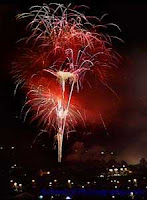
Night photography

Photographs taken outdoors between twilight and dusk.

Night photography is one area where you can forget about multi matrix, spot, honeycombs any other metering system!

Why? Because the only good light meter for night photography is your eye and experience. Because we are no longer dealing with daylight, a metered reading can only be used as a "starting point". There are a few factors in night photography that make camera meters unreliable.An important factor in night photography is how the lighting is portrayed in the scene. When portraying rows of street lighting for example, the direct light source itself is being photographed, therefore the lighting being exposed is very bright. An image of a floodlit building on the other hand is an image exposed by reflected

light. This naturally is much weaker and would need a much longer exposure.


In many cases the two examples would be portrayed in the same image, this would lead to extreme contrasts and very difficult exposure metering problems. In a case like this it is always best to expose for the reflected light and ignore any lighting that is portrayed in the image. Doing this will no doubt lead to overexposure of the light fixtures, but this can look quite acceptable in the image.

Fine Art Nude Photography


Taking photos of unclothed persons for the purpose of artistic expression.

Friday, March 7, 2008

Wedding photography

Wedding photography is a major commercial endeavor that supports the bulk of the efforts for many photography studios or independent photographers.